


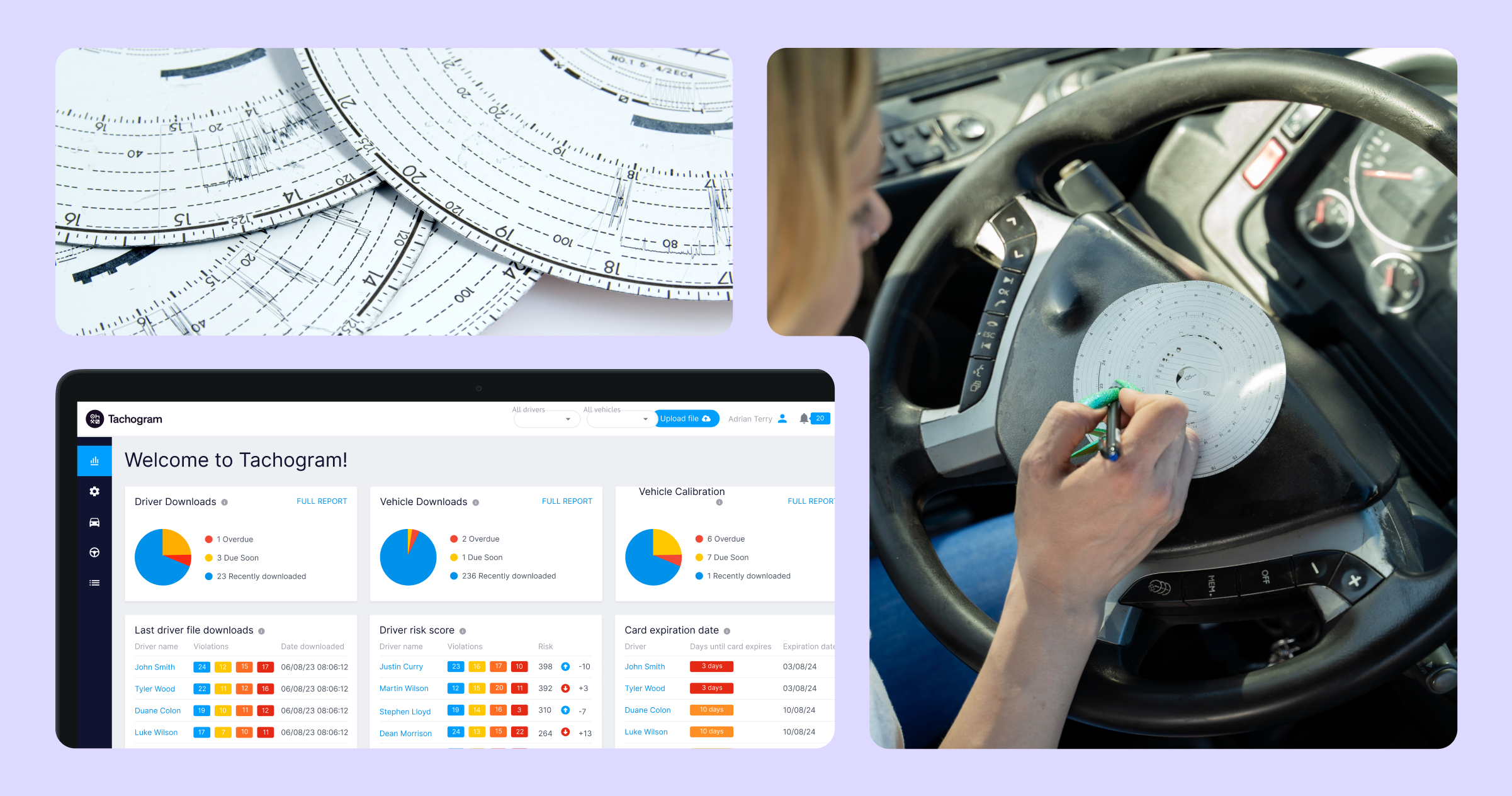
From Digital Records to Smart Compliance: How Tachograph Technology Is Evolving with New Transport Regulations
Road transport is becoming more regulated than ever.
Over the last decade, compliance has shifted from paper records and manual checks to digital monitoring, remote inspections, and cross-border enforcement. Tachographs started as devices for recording driving hours, but have now become key tools for transport compliance.
Modern tachographs can automatically record locations, support remote roadside inspections, and provide authorities with greater visibility into transport operations.
For transport operators, this brings both opportunities and challenges. Automation makes tachograph compliance easier to manage, but keeping up with new regulations and enforcement methods requires a more proactive approach.
This article explores how tachograph technology has evolved, how recent regulations are changing compliance requirements, and how Tachogram helps businesses stay ahead.
From analogue charts to digital data
For decades, tachographs have been used to record driving time, breaks, and rest periods.
Early analogue devices stored information on paper charts. As fleets grew and transport became increasingly international, manual record-keeping became difficult to manage.
The introduction of digital tachographs in the mid-2000s changed that. Electronic records improved accuracy, reduced administration, and laid the foundation for today's compliance systems.
More importantly, tachograph data became something companies could actively use. Instead of reviewing paper records, fleet managers could analyse driver activity, identify potential infringements, and prepare for inspections more efficiently.
Smart tachographs changed the rules
The next major step came with smart tachographs.
The launch of Smart Tachograph Version 1 introduced new features that improved enforcement and increased transparency:
1. Automatic Location Recording
Vehicle locations could now be automatically recorded at key points during a driver's working day, providing additional context during inspections.
2. Remote Roadside Inspections
Authorities could remotely access selected tachograph data while a vehicle is driving, allowing them to identify potential issues before deciding whether to stop a vehicle.
3. Enhanced Tamper Detection
New security mechanisms made it easier to detect attempts to manipulate tachograph data, helping authorities and operators rely on more accurate records.
Together, these features created a more consistent and efficient approach to compliance enforcement.
The EU mobility package accelerates change
Recent regulatory changes have pushed compliance even further.
A major driver has been the EU Mobility Package, which introduced new rules aimed at improving working conditions, strengthening enforcement of driving and rest time regulations, cabotage rules, and tachograph compliance, and ensuring fair competition across Europe.
The latest generation of tachographs, Smart Tachograph Version 2, adds:
Automatic border crossing registration
More detailed location tracking
Improved compliance with EU Mobility Package requirements
Expanded remote inspection capabilities
These features provide authorities with greater visibility into cross-border operations while helping operators maintain more accurate records.
Requirements for international transport
Under EU Mobility Package regulations, vehicles engaged in international road transport had to be equipped with a Smart Tachograph Version 2 (also known as a second-generation smart tachograph) according to the following deadlines:
By 31 December 2024: Vehicles over 3.5 tonnes operating internationally and equipped with an analogue or first-generation digital tachograph must be retrofitted with a Smart Tachograph Version 2.
By 18 August 2025: Vehicles operating internationally with a Smart Tachograph Version 1 must be upgraded to Version 2.
Smart Tachograph Version 2 introduces new features, including automatic recording of border crossings, improved vehicle location tracking, and enhanced support for roadside inspections. These changes are designed to improve compliance monitoring and reduce administrative burdens for transport operators.
For example, authorities can use Smart Tachograph Version 2 data to pre-screen vehicles while they are still on the road and decide whether a roadside stop is needed. The same data can also support checks related to driving and rest times, cabotage operations, and posting of drivers.
Light commercial vehicles are no longer exempt
One of the most significant changes affects operators using vehicles between 2.5 and 3.5 tonnes.
Many courier, delivery, service, and light transport companies previously operated outside of the tachograph-related rules applied to heavy goods vehicles. This year, that is changing – light commercial vehicles between 2.5 and 3.5 tonnes engaged in international transport must also comply with tachograph requirements and have to be equipped with Smart Tachograph Version 2.
As international light commercial vehicle fleets become subject to drivers' hours regulations and tachograph requirements, businesses must introduce processes that may be completely new to them, including:
Driver card management
Tachograph downloads
Drivers' hours monitoring
Rest period compliance
Audit preparation
Compliance is no longer a concern only for large haulage companies.
How Tachogram helps
As regulations become more complex, operators need tools that turn tachograph data into actionable information.
Tachograph analysis tools such as Tachogram help transport companies manage compliance through a centralised platform that monitors driver activity, identifies risks, and maintains accurate records.
With Tachogram, companies can:
Monitor drivers' hours and rest periods
Automate tachograph and driver card downloads via integrations
Identify potential infringements before they become penalties
Generate reports for audits and inspections
Maintain visibility across the entire fleet
In a more regulated transport environment, compliance is no longer just about avoiding fines. It's about protecting drivers, reducing business risk, and keeping operations running efficiently.
Preparing for what's next
Smart tachographs, stricter enforcement, and new cross-border requirements are changing how transport companies manage compliance.
Businesses that combine modern tachograph technology with dedicated compliance tools will be far better prepared for future regulatory changes.
The companies that adapt early will spend less time managing paperwork, respond faster to inspections, and gain greater control over their operations.